AI Dog Storybook: What It Can and Can't Do Well
Generative software can draw your dog in seconds, but turning those raw visuals into a coherent storybook takes careful engineering, smart typography, and human oversight.
🐾 Free: what would your dog say about you?
Answer 6 questions →An AI dog storybook uses modern image-generation technology to transform descriptions and photos of your pet into illustrated digital story pages. When designed thoughtfully, these tools capture the playful spirit and physical quirks of your companion in stylized artistic themes. However, raw machine-generated output often struggles with anatomical precision, character consistency across multiple pages, and clean typography without structured human guidance.
Short answer: An AI dog storybook can quickly generate charming visual styles and imaginative settings, but unrefined algorithms struggle with character consistency, five-legged dogs, and garbled page text. The best results combine generative image models with multi-step rendering pipelines, separate typography, and strict privacy safeguards that protect your uploaded pet photos.
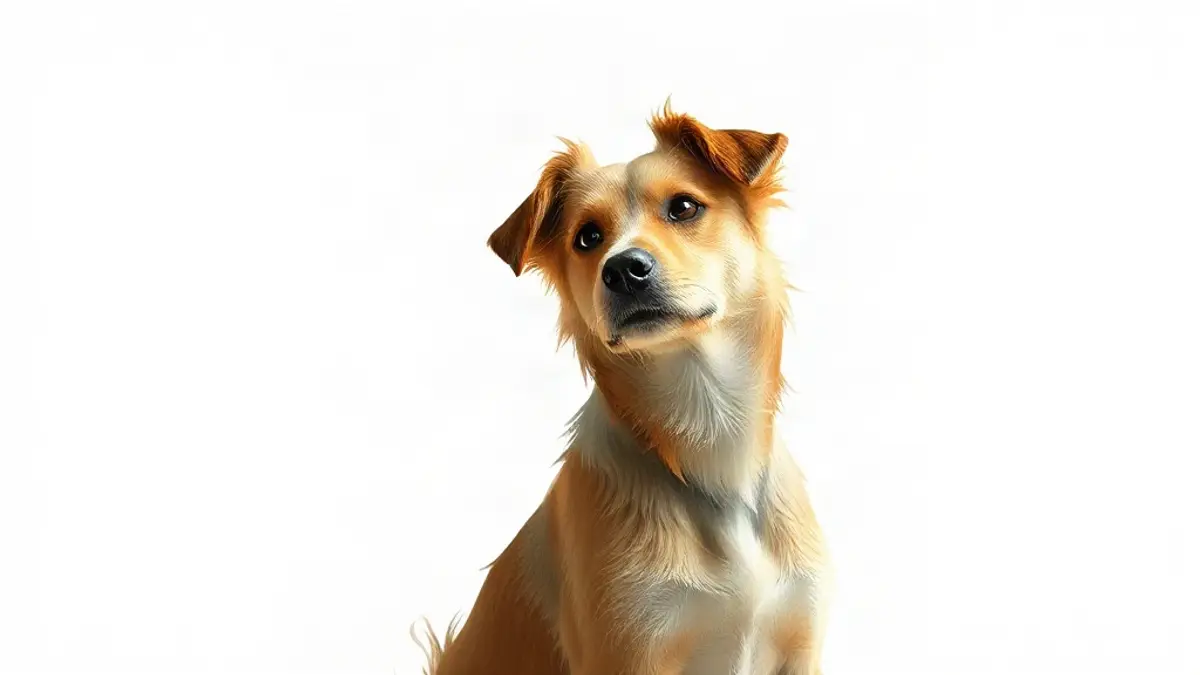
The Real Mechanics of an AI Dog Storybook
When you look at an AI dog storybook, you are seeing the output of modern deep-learning models trained on millions of image and text pairs. These systems do not look at your dog the way a human portrait painter does. They do not hold a memory of how your dog smells after running in wet grass or the exact shape of the dark spot on their left shoulder. Instead, they process mathematical representations of visual features like ear shape, snout length, coat texture, and color pattern.
When a tool creates an AI pet storybook, it attempts to blend those identified features into an artistic style, such as a soft watercolor illustration, a vibrant comic style, or a classic storybook painting. The underlying software takes text prompts—descriptions of scenes, moods, and actions—and generates candidate images pixel by pixel.
Because the software creates images based on probabilistic patterns rather than a fixed three-dimensional model of your actual dog, the results can be both breathtakingly creative and curiously unpredictable. Understanding how these image engines process visual information helps set realistic expectations for anyone looking to build a digital keepsake.
Where Generative Illustration Shines: Style, Speed, and Whimsy
Generative visual models offer remarkable capabilities that traditional custom illustration cannot match in cost or delivery time. For dog owners who want to imagine their pet in fantastic scenarios, these models excel at rendering complex atmospheric lighting, textured backgrounds, and creative costumes.
Here are the primary creative strengths of modern visual algorithms:
- Artistic Style Versatility: Generative tools can render a golden retriever as a Victorian detective, a space explorer, or a cozy hand-painted illustration with equal fluency.
- Rapid Iteration: Instead of waiting weeks for a traditional painter to complete a canvas, software models can render fully colored scene concepts in moments.
- Vibrant Background Detail: Generative visual models excel at creating rich environments, from sunlit oak forests and bustling city streets to cozy living room rugs littered with chew toys.
- Playful Conceptual Blending: The technology seamlessly combines disparate ideas, easily placing a spotted dog in a miniature suit of armor or floating inside a giant soap bubble.
These strengths make visual models an incredible engine for fun. If you want to see what a beagle looks like navigating a castle maze made of peanut butter jars, software models can build that world in seconds.
The Common Pitfalls of an Unfiltered AI Dog Story Generator
If you have ever experimented with a raw AI dog story generator online, you have likely encountered some of the technology’s most famous quirks. While generative art software can draw an impressive dog in a single frame, maintaining control over sequential storytelling across an entire book presents major technical challenges.
Paw Anatomy and Structural Glitches
Image models understand visual shapes as statistical correlations, not biological structures. The software knows that a dog standardly has fur, legs, and paws, but it does not intrinsically understand that a dog must have exactly four legs, two ears, and one nose.
Without strict oversight, a generated page might render a terrier with five front toes, three back legs, or a tail that emerges directly from its ribcage. Ears might melt into surrounding foliage, or collar tags might float phantom-like in midair.
The Character Consistency Challenge
For any storybook to feel meaningful, the main character must look like the same dog from page one to page twelve. If a golden-brown mix has floppy ears on page two, standing ears on page four, and white socks on page six, the narrative magic dissolves.
Raw image generators naturally introduce variations in every single generation pass. Getting an image system to render the exact same canine character across multiple distinct scenes—lying on a bed, chasing a ball in a park, and looking out a rain-streaked window—requires specialized character embedding techniques and multi-stage rendering pipelines rather than basic text prompts.
Rendered Text and Garbled Letters
One of the most frustrating aspects of raw visual AI is text generation within images. Early image generation engines tried to draw text characters as visual shapes rather than typographic fonts. The result was often gibberish—words spelled with extra letters, inverted symbols, or floating hieroglyphs across the book pages.
High-quality keepsake platforms avoid this entirely by decoupling image production from narrative typography. Images are rendered purely as visual background art, while story text is overlaid using clear, crisp typography engines to guarantee readability.
Raw Software Output vs. A Curated Keepsake Pipeline
To understand why some custom books look like a random collection of distorted images while others look like professionally published keepsakes, it helps to compare how raw software outputs differ from a refined creation process.
| Feature or Aspect | Raw Off-the-Shelf AI Generator | Curated Keepsake Pipeline |
|---|---|---|
| Anatomical Accuracy | Frequent extra limbs, missing toes, or distorted tails | Controlled image filtering and manual review stages |
| Visual Consistency | Dog’s coat, ear shape, and size change on every page | Character embeddings enforce consistent coat and facial markings |
| Text Quality | Garbled, unreadable lettering rendered inside the image | Crisp vector typography placed on separate readable layout layers |
| Photo Interpretation | Generic breed templates that ignore unique dog markings | Custom analysis of distinct markings, fur patterns, and collar details |
| Privacy & Storage | Photos often retained or used in open model training | Strict privacy safeguards with no public marketing use without permission |
When you use a platform designed specifically to turn your dog into a custom storybook, you are benefiting from a pipeline built to strip away visual artifacts and preserve what makes your actual pet recognizable.
Building a Character Guide: How to Get an AI Dog Story from Photo Details
Getting a great visual output when creating an AI dog story from photo inputs relies on giving the system clean, well-lit reference information. The software needs to distinguish between permanent physical markings and temporary environmental factors like shadows or mud.
To help software models capture your dog accurately, keep these practical image selection principles in mind:
- Select Clear, Eye-Level Lighting: Choose photos shot in soft natural daylight where your dog’s eyes, muzzle, and ear structure are clearly visible without deep shadows.
- Highlight Distinctive Markings: If your dog has a single white paw, an asymmetrical patch over one eye, or a pink streak on their nose, include photos that clearly showcase those features.
- Avoid Heavy Accessories or Filters: Images featuring heavy winter coats, oversized sunglasses, or extreme wide-angle distortion can confuse the image model’s perception of your dog’s true shape.
- Provide Multiple Angles: A clear front-facing portrait paired with a side profile gives the rendering pipeline the geometric context needed to construct consistent illustrations.
Many dog owners find that taking a few deliberate reference photos makes a dramatic difference in the final artwork quality. If you want to dive deeper into photo selection strategies, explore our detailed guide on creating a personalized dog book from photo submissions.
Discover What Your Dog Is Really Thinking
Before diving into full visual storybooks, many owners enjoy taking a moment to explore their dog’s inner monologue through words alone.
You can answer six simple questions about your pet’s favorite habits, strange quirks, and daily routines in the free six-question experience on our site. It takes roughly sixty seconds, requires no account signup, and generates a personalized letter written from your dog’s perspective that you can read immediately.
Privacy, Data, and Training: What Every Dog Owner Should Ask
In the era of modern computational tools, data privacy is just as important as visual quality. When you upload photos of your pet, your home, or yourself to a digital service, you have a right to know how those images are processed, stored, and used.
When evaluating any software platform that offers custom pet art, consider asking these foundational privacy questions:
- Are my uploaded photos used to train public models? Some open platforms store user uploads in giant public datasets used to train future software iterations. Safer platforms process images transiently for your specific order and do not feed your personal photos into public repositories.
- Will my images be used in public marketing? Respectful platforms never publish your dog’s photos, your name, or your personal story details on social media or advertising campaigns without explicit opt-in consent.
- How long are uploaded files retained? Image files should be retained only as long as necessary to generate your order and allow for customer support downloads, then securely purged.
The technical foundation of generative AI relies on vast datasets, but your personal family memories belong to you. Choose services that treat user data with explicit confidentiality and transparency.
Bridging Text and Art: Why Narrative Heart Outweighs Visual Effects
While visual style gets immediate attention, an AI storybook with my dog only becomes a cherished keepsake when the narrative rings true. A beautiful illustration of a dog sitting in a meadow is pleasant, but an illustration paired with a specific reference to how your dog steals stray socks from the laundry basket creates a real emotional spark.
When reviewing options for custom storytelling, look for systems that place real narrative detail at the center of the book. The best keepsakes build their story arcs around realistic behavioral observations:
- The Specific Greeting Ritual: Whether your dog grabs a prized plush toy to hold in their mouth when you return home or executes a slow, full-body stretch, including these real daily beats grounds the story in reality.
- The Odd Non-Verbal Habit: Many dogs have peculiar quirks, like resting their chin on the coffee table during dinner or staring quietly at a blank corner of the kitchen. These specific details feel deeply personal.
- The Favorite Refuge: A dog’s chosen safe place—under the dining room table during summer thunderstorms or curled like a crescent roll on a blue fleece blanket—gives the story a cozy sense of home.
It is always worth remembering that while software can help format text and craft art, it cannot observe your life. The magic comes from combining technology with the real, unvarnished details that only you know about your dog.
Decoding Dog Behavior Without Over-Attributing Human Thought
When we read a personalized story written from a pet’s viewpoint, it is easy to wonder how much of the story mirrors genuine canine psychology. Science tells us that dogs experience rich emotional lives, including joy, affection, fear, and excitement, but their experience of the world is primary sensory rather than linguistic.
When a storybook depicts a dog thinking in complete English sentences about their daily schedule, it is a playful framing mechanism designed for human enjoyment. Canine welfare experts note that dogs process their environment primarily through scent, auditory cues, and body language. For example, when your dog follows you from the kitchen to the home office, many owners notice it as a sign of attachment, while canine professionals view it as a natural pack behavior that provides safety and routine.
If your dog ever displays sudden behavioral shifts, such as intense restlessness, uncharacteristic hiding, or sudden changes in appetite, avoid relying on creative interpretations. Sudden changes in behavior warrant a quick visit to a veterinarian or a certified professional trainer to rule out underlying medical issues or physical discomfort.
How Custom Digital Keepsakes Fit Into Family Traditions
Digital keepsakes have grown significantly in popularity because they provide flexibility, environmental convenience, and instant portability across devices. A personalized book can be stored safely in cloud storage, shared with family members across the world, or saved on tablets for bedtime reading with children.
Many families choose to build a new custom storybook during major life milestones:
- The First Anniversary of Adoption: Commemorating the day a rescue dog entered the home with a story detailing their transition from a shy newcomer to the ruler of the living room couch.
- Birthdays and Gotcha Days: Creating an annual digital tradition that records your dog’s changing habits, favorite toys, and evolving quirks year by year.
- Welcoming New Family Members: Using an illustrated book to explain a dog’s role as a protective, gentle companion when introducing a new baby or a second rescue pet to the household.
Because digital keepsakes can be saved as high-resolution PDF files, owners also retain the freedom to print pages at home or bind them through local print shops if they prefer a physical object for their bookshelf.
Creating Your Keepsake Storybook
If you want to turn your dog’s daily routines into an illustrated digital book, our personalized storybook experience offers a carefully designed pathway. Instead of leaving image generation and text layout to random chance, we combine structured narrative generation with visual pipelines built specifically for pet illustration.
Our flagship storybook offering, Our Story™ personalized digital storybook ($19, one-time purchase offered after our core letter keepsake), creates a 10–12 spread illustrated digital storybook starring you and your dog. The narrative and visual themes are built directly from your answers to short questions about your daily life together, paired with one photo of your dog and one photo of you.
It is important to understand that the visual illustrations are AI-assisted artistic interpretations based on your reference photos, designed to capture the style and essence of your dog rather than a precise photographic portrait. The final keepsake is delivered electronically as a high-resolution digital PDF—nothing is printed or shipped, giving you a digital asset you can keep forever and print whenever you choose.
For dog lovers interested in other formats, we also offer our foundational Letter From My Dog keepsake ($7), which generates a written personal letter, and the Dog Movie Poster Pack ($4), which places your dog into stylized cinematic poster art.
The Role of Technology in Preserving Dog Memories
At its best, technology should serve as a mirror that reflects the warm, funny, and deeply comforting reality of living with a dog. An algorithm cannot feel the soft warmth of a dog leaning against your legs while you make morning coffee, nor can it experience the quiet comfort of a resting chin on your knee after a long day.
What modern tools can do is provide a creative framework. By taking your real memories—the stolen tennis balls under the couch, the dramatic sighs before naptime, the intense excitement over the sound of a cheese wrapper—and wrapping them in whimsical illustration, software becomes an assistant to human memory.
When choosing to make a book about you and your dog, focus less on searching for perfect software perfection and more on collecting the honest, small details that make your companion who they are. The art provides the color, but your real life together provides the soul.
Frequently asked questions
How does an AI dog storybook create illustrations from my photos?
An AI dog storybook uses deep-learning visual models that analyze the colors, shapes, facial features, and coat patterns in your uploaded reference photos. The software identifies key physical characteristics, such as ear shape or distinct facial spots, and blends those details into a pre-selected artistic style, rendering stylized story pages based on scene prompts.
Can an AI dog story generator guarantee exact character matching on every page?
Raw image generators cannot guarantee perfect mathematical matching across multiple pages because every image generation pass introduces slight variations. However, advanced keepsake systems use specialized character embeddings and guided pipeline checks to keep coat colors, markings, and overall appearance consistent throughout the story narrative.
Are my pet photos safe when creating a personalized AI dog book?
Data safety depends on the platform you choose. Dedicated keepsake platforms prioritize privacy by processing uploaded photos solely to generate your custom order, keeping files in secure temporary storage, and never using personal pet photos for public model training or marketing without explicit permission.
How do I ensure my dog’s unique physical markings show up in the artwork?
To help the generation engine recognize unique markings, upload clear, well-lit photos taken at eye level in natural sunlight. Avoid photos with heavy shadows, unusual wide-angle lens distortion, or heavy clothing that hides your dog’s distinct fur patterns and facial shape.
Is an AI dog storybook delivered as a physical book or a digital file?
Keepsake products created through our platform are delivered exclusively as digital PDF files after purchase and generation. There is no physical printing or shipping involved, allowing you to view your book immediately on digital devices, share it electronically, or print copies at home.
Can I use a dog letter generator if I do not have high-quality photos?
Yes, text-focused keepsakes like a custom dog letter generator rely entirely on your written answers to questions about your dog’s habits and personality rather than photo uploads. This allows you to create a heartwarming written keepsake even if you lack clear, high-resolution reference photographs.
Keep reading
Personalized Dog Book From Photo: Getting the Best Result
Clear lighting, eye-level camera angles, and visible coat patterns transform everyday pet snapshots into rich, custom storybook artwork.
Turn My Dog Into a Book: How a Custom Dog Storybook Works
A detailed look at how personal details and photos are turned into a custom illustrated storybook starring your dog.

Dog Letter Generator: What Makes One Worth Using
An honest guide to dog letter generators, generic templates, privacy rules, and how custom details make digital keepsakes feel real.