The Bond Between Dog and Owner: Why It Runs So Deep
The depth of your relationship with your dog lives in tiny daily routines, quiet look-ups, and the funny habits only you know.
🐾 Free: what would your dog say about you?
Answer 6 questions →The bond between dog and owner is built on thousands of small, repetitive daily interactions that create a shared emotional language between two completely different species. It combines co-evolutionary history with tiny personal routines—like the specific way your dog rests a chin on your knee while you boil water for coffee. This connection deepens through predictable schedules, mutual comfort, and quiet observation over months and years.
Short answer: The bond between dog and owner is a unique psychological and social connection shaped by thousands of years of shared history and reinforced through daily micro-routines. It develops through eye contact, predictable habits, clear communication, and shared comfort, creating a deep mutual reliance that looks entirely different for every human and dog pair.
The Historical Roots of the Dog and Human Connection
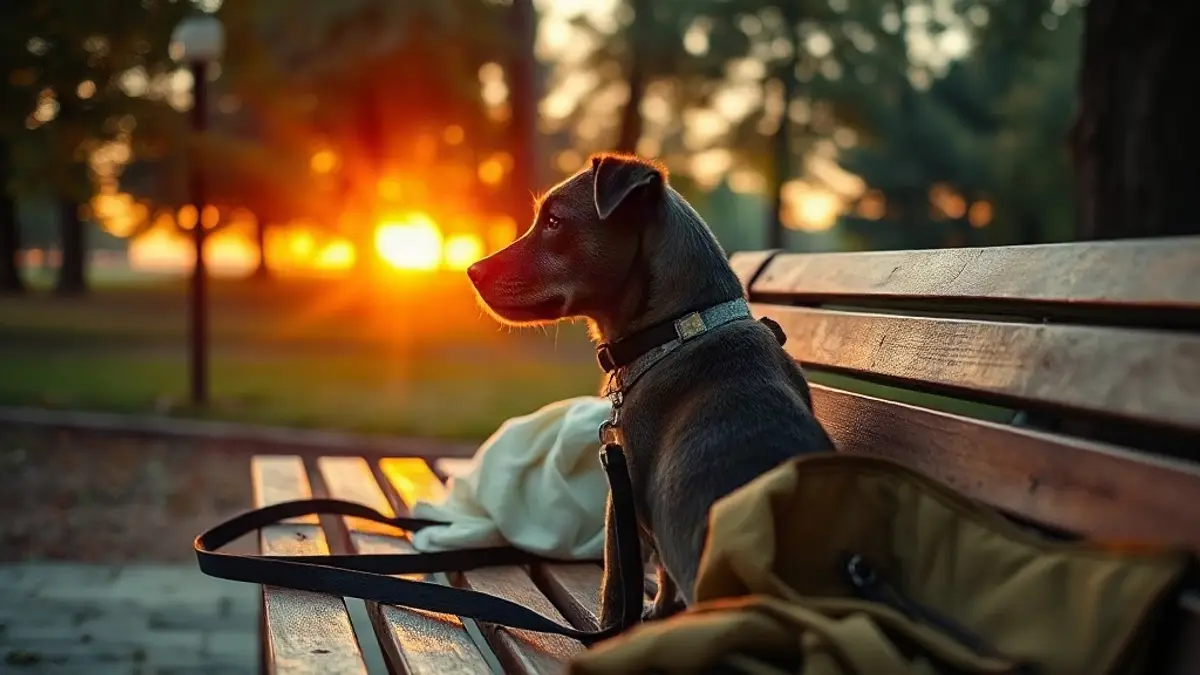
To understand why sitting on the couch with a sleeping terrier feels so restorative, it helps to look backward. Human beings and dogs have walked alongside each other for tens of thousands of years, forging an evolutionary partnership unmatched in the animal kingdom. While early relationships centered on utility—hunting help, livestock guarding, and alarm barking—the fundamental nature of our shared life shifted as dogs moved from working quarters into human homes.
Over centuries, dogs adapted to read human gestures, facial expressions, and vocal tones with extraordinary precision. Scholars studying the human–canine bond note that domestic dogs respond to human pointing and gaze direction in ways that even wild primates do not. This shared evolutionary timeline created a bridge between species that allows for emotional synchrony in daily home life.
Today, that ancient survival partnership has transformed into personal companionship. Your dog does not need to hunt for dinner or keep watch over a campsite, but the instinct to monitor your movements and seek safety in your presence remains active. When your dog checks on you while you pack a bag or finishes a meal, you are experiencing the modern iteration of a partnership that took millennia to assemble.
Why the Bond Between Dog and Owner Feels So Uniquely Personal
While history explains the general connection between humans and dogs, it does not explain why your specific dog feels like such an irreplaceable part of your life. The exact nature of the bond between dog and owner rests in hyper-specific details that exist nowhere else.
Consider the daily patterns that develop in a single household:
- The particular grunt your dog makes when settled into a corner of the couch.
- The half-inch tail wag reserved exclusively for when you wake up in the morning.
- The exact radius your dog keeps while walking off-leash in an open field.
- The quiet habit of leaving a yellow rubber ball inside your favorite shoe.
These small behaviors create a living language between you and your dog. You learn to interpret the subtle difference between a bark that means someone walked past the window and a whine that means a tennis ball rolled under the sofa. In turn, your dog learns your habits: the sound of your keys picking up, the distinct sigh you drop before standing up from your desk, and the exact jacket that signals a long afternoon walk.
Many people remark that my dog is my best friend precisely because this understanding requires no performance. Your dog does not care about your job title, your messy living room, or your daily stress. They simply track your presence and respond to your shared routine.
The Daily Micro-Routines That Shape Your Dog Human Relationship
We often imagine deep connections are built during dramatic moments—a high-stakes rescue story, a cross-country move, or an intense training milestone. In reality, a strong dog human relationship is constructed out of quiet, unglamorous micro-routines repeated hundreds of times a year.
Think about the morning ritual in your home. Before you even open your eyes, your dog might stretch, place two front paws on the edge of the mattress, and blow a soft puff of air against your shoulder. Or perhaps your dog waits at the top of the stairs, ears flipped slightly backward, listening for the sound of the food bin opening. These predictable beats create emotional safety for a dog.
Morning wake-up gesture -> Kitchen routine -> Doorway check -> Evening settle
Predictability is currency in the canine world. When a dog knows what comes next, stress decreases and trust deepens. Observing the little things dogs do during these moments reveals how closely they pay attention to us.
Imagine a middle-aged mutt named Arthur. Every evening at seven o’clock, when the television turns on, Arthur retrieves a frayed rope toy, carries it to the rug, drops it with a thud, and leans his ribcage against his owner’s shins. Nothing extraordinary happens during this interaction, yet it serves as an anchor for both human and dog at the end of a busy day.
How Dogs Express Trust and Comfort in Everyday Life
Because dogs cannot use words, they express emotional attachment through physical position, movement, and eye contact. Learning to read these signals brings clarity to your emotional bond with your dog without projecting human concepts onto canine instincts.
When a dog rests against your leg while you prepare dinner, they are using you as an anchor point. In a dog’s view, choosing to rest near a specific person signals comfort and security. Similarly, long, soft eye contact—often accompanied by a loose posture and slow blinking—triggers a release of oxytocin in both dog and owner, reinforcing mutual calm.
Here are common ways dogs display quiet trust in home environments:
- Physical leaning: Resting their body weight against your legs while standing or sitting.
- Exposed bellies: Rolling onto their back in a quiet room, showing complete relaxation in their surroundings.
- Carrying your items: Fetching a shoe or t-shirt when you are away, seeking out familiar scents.
- Sighing deeply: Dropping their chin onto a cushion or your lap with a heavy release of breath, marking a transition into rest.
Observing these subtle cues is one of the clearest ways of identifying the signs your dog loves you in daily living. It is a playful way to read their behavior as an ongoing nod of trust.
Note on behavior changes: If your dog suddenly stops resting near you, shifts from calm to intense restlessness, or shows sudden aggression, anxiety, or signs of physical discomfort, consult a veterinarian or certified dog behavior specialist to rule out underlying medical or training issues.
Exploring the Dog Owner Bond Across Different Life Stages
The nature of the dog owner bond is not static. It shifts as your dog grows from an energetic, chaotic puppy into a steady adult and eventually into a quiet, grey-muzzled senior.
The Early Months: Learning Each Other’s Language
During puppyhood, the focus is almost entirely on translation, boundaries, and building basic confidence. A young dog is learning how your home functions, what household noises mean, and how to navigate a world full of strange objects and rules.
In this phase, the bond is energetic and frequently messy. You learn how to catch a puppy before they chew a table leg, and your puppy learns that you are the source of food, safety, and direction. The dynamic centers on exploration and boundary setting, laying the groundwork for future trust.
The Golden Years: Soft Habits and Deep Mutual Understanding
As dogs age, the nature of companionship grows quieter and remarkably intuitive. A senior dog rarely needs to be reminded of household rules. They know the exact spot on the rug where the afternoon sun hits, the precise speed you walk on cold mornings, and the evening routine word for word.
Reading a letter from my senior dog imagined through this lens highlights the quiet beauty of these later years. The frantic energy of youth gives way to a steady, comfortable rhythm where simple physical presence is enough. Walking down the block might take twenty minutes instead of ten, but the shared pace reflects a relationship built on years of walking the same path together.
What Would Your Dog Say About Your Everyday Life Together?
If you step back and look at your daily routine through your dog’s eyes, you might see a completely different world. To your dog, you are the person who opens doors, finds lost tennis balls, gives the best ear scratches, and makes the house feel safe when it thunders.
If you have ever wondered how those tiny moments add up, take a moment to explore the free six-question experience on our site. It asks a few simple questions about your dog—their name, their funny home greetings, and their favorite habits—and creates a free personalized note showing what your dog might say about your life together. It takes about a minute, requires no signup, and gives you a sweet window into your daily bond.
How Different Styles of Dog and Human Connection Take Shape
No two dogs are identical, and no two owners relate to their pets in precisely the same way. The shape of your dog and human connection depends on your lifestyle, your dog’s temperament, and the activities you share.
The table below outlines four common bond dynamics observed in everyday dog-owning households:
| Connection Style | Primary Focus | Daily Communication | Key Signal of Trust |
|---|---|---|---|
| The Constant Shadow | Continuous physical presence and room-to-room companionship | Soft look-ups, following close at heel, resting heads on feet | Resting calmly in high-traffic work areas near you |
| The Outdoor Teammate | Shared active tasks, trails, and physical play | Quick ear flicks, checking back during runs, focused eye contact | Looking to you for direction in dynamic environments |
| The Quiet Companion | Low-energy coexisting, peaceful room sharing | Deep sighs, resting nearby on furniture, loose posture | Falling into a deep sleep anywhere in the house |
| The Playful Instigator | Game creation, toy retrieval, and interactive humor | Paw nudges, playful bows, bringing prized items to your lap | Dropping a wet toy directly onto your lap or keyboard |
Recognizing which dynamic fits your home can help you appreciate why your relationship feels the way it does. Whether your dog is a quiet presence in the corner of your office or a constant shadow in the kitchen, both styles represent genuine comfort and security.
Simple Everyday Ways to Strengthen the Relationship With Your Dog
Building a deeper relationship with my dog does not require expensive gear or complex training programs. It comes down to intentional engagement within your existing routine.
Here are four structured, practical activities that strengthen mutual trust:
- Decompression Walks: Take your dog on a long leash in a quiet green space and let them sniff whatever they choose without rushing them. Sniffing lowers a dog’s heart rate and provides mental stimulation.
- Focused Grooming Sessions: Spend five minutes calmly brushing your dog or wiping their paws with a warm cloth, rewarding quiet patience with soft praise or treats.
- Short Training Games: Spend three minutes teaching a fun, low-pressure trick like touch or spin using positive rewards. Small successes build clear lines of communication.
- Quiet Coexisting: Sit on the floor at your dog’s eye level without demanding attention or holding a phone. Let your dog choose whether to approach, lean, or simply nap beside you.
Beyond these structured routines, small habits integrated into your day make a noticeable impact over time:
- Greet your dog with calm affection when coming home, matching their energy level without overexciting them.
- Talk to your dog in a gentle, warm vocal tone during regular chores like folding laundry or making dinner.
- Learn your dog’s specific body language signs when they feel overwhelmed by visitors or loud noises, stepping in as a protective buffer.
- Keep a predictable schedule for feeding, walking, and resting to maintain a low-stress environment.
If you are looking for fresh ideas to break up a weekly routine, exploring dedicated bonding activities with your dog can offer practical inspiration tailored to different energy levels and ages.
Preserving Your Bond in a Personalized Keepsake
The tiny details that define your bond—the exact spot your dog rests their chin, the sock stealing, the morning stretch—are worth remembering. At Letter From My Dog, we help dog owners capture those hyper-specific habits in personalized digital keepsakes created from the details you share, with the help of generative AI.
Our flagship keepsake, Letter From My Dog™ ($7, one-time purchase), is a full personalized digital letter written from your dog’s perspective. Built entirely from your answers about their habits, quirks, and daily routines, it includes:
- Our Bond Story: A detailed letter reflecting your daily life together.
- 10 Little Things: A list of small moments your dog loves about living with you.
- The Tiny Things™: Specific callouts of your dog’s unique quirks and habits.
- More Tail Wags: Personalized bonding ideas tailored to your dog’s personality.
- A Memory Worth Keeping: A dedicated section capturing your favorite shared memory.
- Digital Formats: Printable PDF, phone wallpaper, and Instagram story card.
We also offer a digital personalized dog storybook ($19) that turns your pet’s daily adventures into an illustrated digital book, as well as a Dog Movie Poster Pack™ ($4) that imagines your dog starring in custom genre poster art. Every keepsake is generated after purchase and ready to save, print, or share at home.
Frequently asked questions
How long does it take to form a strong bond between dog and owner?
Building a strong bond with a dog usually takes three to six months, though early trust begins within days. Rescue dogs or dogs from complex backgrounds may take longer as they adjust to new surroundings. Consistency, predictable routines, clear boundaries, and calm interactions accelerate this timeline significantly.
Why does my dog follow me into every room?
Dogs often follow owners because they view them as a primary source of security, social engagement, and direction. This behavior, sometimes referred to as shadow behavior, is a normal expression of canine attachment. However, if your dog shows distress, pacing, or vocalization when separated from you, consult a veterinarian or professional trainer regarding separation anxiety.
Can a dog form a deep emotional bond with more than one person?
Yes, dogs can form deep, distinct bonds with multiple household members. A dog may connect with one person for active play and walks, while choosing another family member for quiet evening naps. Each connection reflects different aspects of the dog’s social routines and daily interactions.
How do I know if my bond with my dog is growing stronger?
Key indicators include your dog looking to you for guidance in unfamiliar environments, relaxing their posture when you enter a room, maintaining soft eye contact, and seeking physical proximity during rest. As trust grows, your dog will also respond more quickly to subtle vocal tones and body cues.
Does sleeping in the same room strengthen my dog human relationship?
Sleeping in the same room can enhance comfort and closeness for many dogs, as proximity during vulnerable sleep hours reinforces feeling safe within the pack. Whether your dog sleeps on your bed or in their own dog bed nearby, sharing a sleeping space helps establish a consistent, reassuring nighttime routine.
What should I do if my dog suddenly becomes distant or anxious?
Sudden changes in behavioral patterns—such as uncharacteristic distance, hide-and-seek behaviors, excessive panting, or irritability—often indicate underlying physical pain, illness, or acute stress. You should schedule an appointment with your veterinarian promptly to rule out health issues before attempting behavioral or training adjustments.
Keep reading
Bonding Activities With Your Dog: 25 Simple Ideas
Building a closer connection with your dog does not require huge trips or fancy gear—just small, intentional moments throughout your day.

My Dog Is My Best Friend: What That Really Means
Exploring why our dogs become our closest companions, how daily routines build trust, and what that bond says about human love.
Signs Your Dog Loves You (and Trusts You)
Your dog cannot say 'I love you' in words, but their body language, sleep spots, and walk check-ins reveal how deeply you are connected.