Love Letter From My Dog: Sweet Words That Feel Real
Learn how to write a sweet, emotional letter from your dog by trading generic sentiment for the specific daily habits only you know.
🐾 Free: what would your dog say about you?
Answer 6 questions →Creating a sweet and emotional love letter from your dog relies on replacing poetic cliches with the hyper-specific routines you share every day. Instead of relying on grand statements about loyalty, an authentic message focuses on real moments, like saving the corner of a morning slice of toast or sitting on your foot while you boil water for tea. By translating these quiet micro-moments into your dog’s imagined voice, you produce a meaningful keepsake that feels remarkably personal and grounded in your real life.
Short answer: A genuine love letter from my dog captures the small, daily routines and specific quirks that define your life together. By trading generic declarations of devotion for real-life details—like stealing socks, claiming the warm spot on the sofa, or demanding breakfast five minutes early—you create a heartwarming letter from dog that feels deeply emotional, authentic, and uniquely yours.
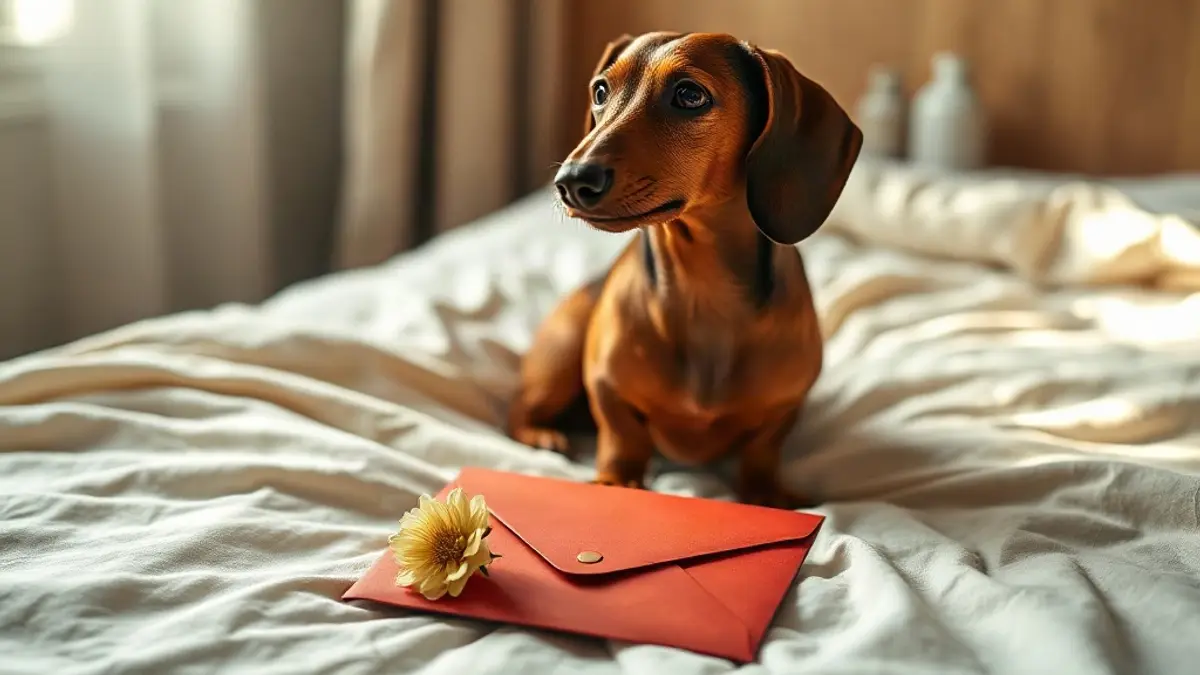
What Makes a Love Letter From My Dog Feel True?
When owners set out to capture their dog’s voice on paper, they often default to lofty, sweeping language. They write about eternal devotion, endless gratitude, and noble companionship. Yet when you look down at the dog sleeping across your slippers, those dramatic literary phrases do not match the goofy, grounded reality of living with a canine companion.
A truly emotional letter from dog works because it embraces eye-level observations. Dogs do not experience life as a grand philosophical narrative; they experience it through immediate sensory details, predictable schedules, and personal habits. They notice the exact sound of your keys dropping into the hallway bowl, the specific sweater you wear when a trip to the park is imminent, and the precise angle you tilt your mug when there is a drop of milk left at the bottom.
Through a playful process of anthropomorphism, owners can translate these tiny sensory interactions into written expressions of affection. Framing your dog’s perspective is not about pretending to read their mind with scientific certainty. Instead, it is a creative, affectionate way to celebrate the quiet bond you share. When a letter centers on the literal items in your home—the squeaky green rubber frog under the sofa, the habit of resting a heavy jaw on your knee during evening television—it immediately feels honest, relatable, and deeply touching.
Why Generic Phrases Fail in a Heartfelt Letter From Dog
Generic affection often lands with a thud because it could apply to any dog on any street in the world. Saying you are my world and I will love you forever sounds pleasant, but it carries no distinct fingerprint. It misses the quirky texture of your actual dog’s character.
Consider the difference between a broad statement and a specific observation. Saying a dog is loyal is abstract. Describing how your dog wakes up the moment your alarm chimes, trots directly to the bathroom door, and sits quietly on the bath mat until you turn off the shower is concrete. The devotion is not lost when you focus on the daily bath mat routine—it is elevated. The practical habit gives the emotion something solid to rest on.
If you are thinking about how to express love for your dog, remembering that dogs show their feelings through action rather than abstract thought helps shape your writing. When crafting a dog love letter, every sentence should pass a simple test: could this line belong to the golden retriever next door, or could it only belong to my dog? If the line is so broad that any pet could have spoken it, swap it out for a memory that only happened in your living room.
Grounding Your Emotional Letter From Dog in Daily Habits
The most believable voice for a dog is one that treats ordinary daily events like major historical moments. To a dog, breakfast is not just a meal; it is an incredible daily miracle that occurs because you opened a cupboard. A rainy afternoon walk is not a chore; it is a brave expedition conducted under an umbrella.
To ground your letter of love from dog in real life, build your sentences around the predictable rhythms of your household. Pay attention to how your companion responds to specific rooms, times of day, and items of clothing. Here are five concrete everyday rituals that make excellent foundations for a letter:
- The morning ritual: How your dog wakes you up, whether by nudging your forearm with a cold nose, groaning softly while stretching, or placing a heavy paw directly on your cheek.
- The threshold greeting: The precise sequence of events when you open the front door, from full-body wiggles to fetching a specific shoe or stuffed toy to present as a welcome gift.
- The kitchen patrol: Standing guard while you cook, maintaining total focus whenever cheese wrappers rustle or vegetables are chopped on the wooden cutting board.
- The working companion: Positioning themselves underneath your desk, leaning against your chair wheels, or putting a chin on your keyboard during afternoon video calls.
- The night wind-down: The dramatic three-circle turn before settling into the crook of your knees on the sofa just as the evening news starts.
If you want to see how these daily habits translate into words, try the free six-question experience. In about a minute, with no signup required, you can answer six quick questions about your dog’s name, unique habits, and favorite activities to receive a personalized picture of what your companion might say about you.
Comparing Generic Cliches to Specific Emotional Details
Writing a sweet letter from dog requires shifting your language away from poetic tropes and toward observable reality. When you isolate the specific quirks that define your dog, the emotional weight of the letter increases naturally without feeling overly dramatic or forced.
The table below illustrates how common, generic statements can be converted into sharp, hyper-specific lines that reflect genuine canine behavior and personal warmth.
| Generic Cliche | Specific Real-Life Alternative | Why the Specific Alternative Works |
|---|---|---|
| ”I will love you until the end of time." | "I will follow you into the hallway even when you are just getting a glass of water.” | Replaces abstract broadness with an observable daily habit of companionship. |
| ”You are my hero and protector." | "I appreciate that you pretend not to notice when I bark at the afternoon mail carrier.” | Captures the comical, cozy partnership between owner and dog. |
| ”Thank you for all the wonderful treats." | "Thank you for giving me the crisp end of the cucumber every single time you make a salad.” | Highlights a hyper-specific shared habit that only the owner recognizes. |
| ”I am always thinking of you." | "I know it is time for our walk when you put on the green jacket with the noisy zipper.” | Shows how dogs associate specific human cues with moments of joy. |
| ”Our home is filled with endless warmth." | "My favorite place in the house is the exact patch of sunlight on the rug next to your desk.” | Grounded in the physical spaces and simple comforts of everyday life. |
When you replace broad statements with observable details, your writing gains immediate personality. Readers—and dog owners in particular—resonate with specific actions because they mirror real life. A heartfelt letter from dog does not need grand literary metaphors when the reality of your shared kitchen routine is already so full of character.
The Two Most Effective Emotional Devices: Small Promises and Routines
If you want to create a heartwarming letter from dog that brings a smile to your face while pulling at your heartstrings, two narrative devices work exceptionally well: the small promise and the routine as devotion.
The Small Promise
A small promise is a humorous or gentle commitment made from the dog’s point of view. It acknowledges their canine instincts while demonstrating a funny effort to be a good companion. Instead of promising eternal perfection, the dog promises something manageable and delightfully grounded.
For example, a fictional line might read: “I promise to try very hard not to bark at the delivery driver tomorrow, unless they step onto the top porch stair, in which case I must execute my professional duties.” Another small promise could be: “I promise to leave at least half of the throw blanket for your feet tonight.” These minor commitments feel genuine because they capture the push-and-pull between a dog’s natural impulses and their desire to stay close to you.
Routine as Devotion
The second device frames regular household habits as intentional acts of love. Dogs thrive on predictability. From a canine perspective, sitting next to your chair while you drink coffee is not an accident—it is a vital daily appointment.
When you describe routines as conscious acts of affection, the letter gains emotional depth without slipping into syrupy sentimentality. You might note how your dog checks every room in the house before settling down for the night, or how they insist on walking on your left side during evening strolls. Observing these patterns helps clarify signs your dog loves you, showing that devotion in dogs is expressed through proximity, repetition, and shared space.
How to Write a Sweet Letter From Dog Without Getting Syrupy
Striking the right tone in a dog love letter requires balancing sincerity with lighthearted humor. When a letter becomes too melodramatic, it can feel artificial. Dogs are joyful, pragmatic creatures who spend significant energy thinking about snacks, tennis balls, and comfortable nap locations. Keeping those elements front and center prevents the letter from feeling heavy.
Follow these practical steps to maintain a balanced, heartwarming tone throughout your piece:
- Maintain an upbeat baseline: Even when expressing deep affection, keep the general mood energetic and cheerful, matching the natural enthusiasm of a healthy dog.
- Mix practical needs with warmth: Pair an emotional line about comfort with a comedic note about dinner time or squeaky toys.
- Use simple, direct sentence structures: Dogs are uncomplicated communicators. Short, declarative sentences sound far more authentic than long, complex clauses.
- Highlight minor flaws and funny habits: Mentioning stolen socks, counter-sniffing, or dramatic sighs adds charm and reality to the text.
- Focus on the present moment: Dogs live entirely in the present. Frame their feelings around today’s walk, tonight’s dinner, and right now’s lap nap.
If you lean too heavily into comedy, the piece becomes a comedy skit; if you lean too heavily into drama, it loses the canine spirit. Mixing gentle humor with genuine observations keeps the piece grounded. For more ideas on balancing humor with heart, explore our guide to writing a funny letter from dog.
Sample Fictional Lines for Different Dog Personalities
Every dog possesses a distinct personality. A bouncy young terrier experiences the world differently than a slow-moving senior hound. Below are illustrative fictional examples showing how to adapt the tone of a love letter from my dog based on different personality types.
The Kitchen Inspector
Imagine an eager beagle named Pepper who spends half of her day supervising meal preparation. Her letter would focus heavily on culinary teamwork: “I want you to know that I take my job behind the kitchen counter very seriously. When a shred of cheddar falls onto the linoleum, I am there within two seconds to clear the hazard. That is not just greed—that is my personal commitment to keeping our floors clean for both of us.”
The Gentle Senior
Imagine a thirteen-year-old rescue retriever named Barnaby whose pace has slowed down over the years. His letter reflects quiet, steady comfort: “My legs may move a little slower on the morning hill, but my favorite spot in the world has not changed. It is still right beside your left knee on the rug. Thank you for slowing your stride so we can smell every single fence post together.”
The Energetic Rescue Companion
Imagine a mixed-breed dog named Cleo who was adopted from a local shelter two years ago. Her letter highlights the joy of safety and security: “Remember the first week when I was nervous about the sound of the vacuum cleaner? I still do not entirely trust that machine, but I trust you completely. As long as I am sitting behind your legs, there is nothing in this house that can scare me.”
Safety Note: While writing about your dog’s quirks is fun, always monitor real-world changes in your pet’s health and disposition. If your dog shows sudden changes in behavior, unexplained anxiety, signs of physical pain, or dietary distress, consult a veterinarian or certified animal behaviorist promptly rather than attempting to interpret the behavior on your own. For general wellness, remember that common household items like chocolate, raisins, and onion products are toxic to dogs; always speak with your vet before introducing new foods to your pet’s routine.
Reading Your Dog’s Daily Habits as Quiet Devotion
Owners often look for grand gestures of affection, but canine love is usually communicated in small, quiet ways throughout the day. Recognizing these subtle signs provides rich material for any letter you write.
When a dog rests their head against your shin, leans their body weight against your legs while you wait at a crosswalk, or simply keeps one ear pointed toward you while sleeping, they are exhibiting trust and connection. Exploring the unique things I love about my dog gives you a long list of specific behaviors to reference in your text.
These quiet observations make wonderful additions to special occasion notes, such as a Valentine’s gift from dog. When you highlight the low-key moments—like your dog choosing to chew a bone in the same room as you rather than alone in the hallway—you honor the steady, comfortable nature of living alongside a domestic animal.
Turning These Memories into a Love Letter From My Dog Keepsake
If you want to transform your observations and favorite memories into a beautifully polished keepsake, our personalized digital experience makes the process simple and delightful.
Through the Letter From My Dog™ ($7, one-time purchase), you can create a complete custom letter written from your dog’s perspective. Created from the details you share with the help of generative AI, this digital keepsake brings your dog’s unique voice to life using your real household memories. Each order includes a full personalized letter, Our Bond Story, a tailored list of 10 Little Things Your Dog Probably Loves About Life With You, The Tiny Things™, More Tail Wags bonding activity suggestions, and A Memory Worth Keeping section. You also receive high-resolution printable PDF files formatted for home printing, a custom phone wallpaper, and an Instagram story share card. There are no subscriptions or recurring fees; your files are generated after purchase and sent directly to your inbox.
Looking for additional digital keepsake styles? You can also turn your dog’s life into a personalized digital storybook with our personalized dog storybook ($19) or create a custom movie poster set featuring your pet with our dog movie poster pack ($4).
Frequently asked questions
How do I choose the best details for a love letter from my dog?
Select details that are completely unique to your dog’s daily routine. Think about their specific habits, such as how they wake you up in the morning, their favorite non-toy object, or the exact spot they sleep while you work. The more specific and recognizable the detail, the more meaningful the completed letter will feel to anyone who reads it.
Can a dog letter be both funny and deeply moving?
Yes, the best letters combine humor with genuine affection. Dogs naturally blend goofy behaviors—like stealing socks or begging for crusts of toast—with deep loyalty and comfort. Including funny, practical habits grounds the emotional moments, preventing the text from feeling overly dramatic or syrupy while keeping the overall tone warm and realistic.
How long should a homemade letter from a dog be?
A great letter from a dog usually ranges between 300 and 600 words. This length provides enough space to include three or four specific daily anecdotes, a warm statement of appreciation, and a playful promise without becoming repetitive. Focus on clear, vivid descriptions rather than length.
Is it normal to write a letter from a pet’s point of view?
Writing from a pet’s point of view is a popular, creative way for owners to celebrate their connection with their pets. It allows owners to reflect on shared routines, preserve funny memories, and express affection in a lighthearted format. It serves as a personal keepsake that captures a snapshot of your dog’s life today.
What if my dog has unusual behavioral habits or fears?
Unusual habits—like fearing the vacuum cleaner or hiding from thunder—add authentic character to a letter when framed gently and playfully. However, if your dog displays sudden changes in behavior, intense fear, aggression, or signs of pain, you should always consult a qualified veterinarian or certified animal trainer to ensure your dog’s physical and emotional well-being.
What is the best way to display or gift a completed letter?
Digital letters can be printed at home on high-quality paper or cardstock and framed for display on a desk or wall. They also make excellent gifts for family members when printed and paired with a favorite photo of the dog. Digital versions can also be saved as phone wallpaper or shared on social media.
Keep reading
Funny Letter From Dog: Ideas That Actually Land
The funniest dog letters skip generic pet tropes and focus on hyper-specific daily routines, dramatic confessions, and the quiet affection behind everyday chaos.
Valentine's Gift From Dog: Cute Ideas for Your Person
A thoughtful guide to creating meaningful, personalized Valentine's gifts written from your dog's perspective.
How to Express Love for Your Dog in Ways They Feel
Discover how to show your dog affection in ways they truly understand, while capturing your unique bond through heartfelt words and memories.