Why Does My Dog Stare at Me? Decoding the Look
From the quiet couch gaze to the intense dinner table stare, here is what your dog's eyes are actually trying to tell you.
🐾 Free: what would your dog say about you?
Answer 6 questions →Your dog stares at you because you are the center of their universe, serving as their food provider, social anchor, and primary source of entertainment. Dogs have evolved alongside humans for millennia, mastering the art of reading micro-expressions and tracking physical movement to anticipate what happens next. Whether they are waiting for a morning walk, hoping for a stray piece of cheese, or offering a soft look of pure trust, eye contact is their most powerful quiet communication tool.
Short answer: Your dog stares at you to gather information, ask for something specific, or express quiet affection. Because dogs rely heavily on human visual cues, eye contact helps them anticipate walks, meal times, and attention. Soft eye contact releases mutual bonding hormones, while a tense, hard stare indicates stress, fear, or protective behavior requiring gentle space.
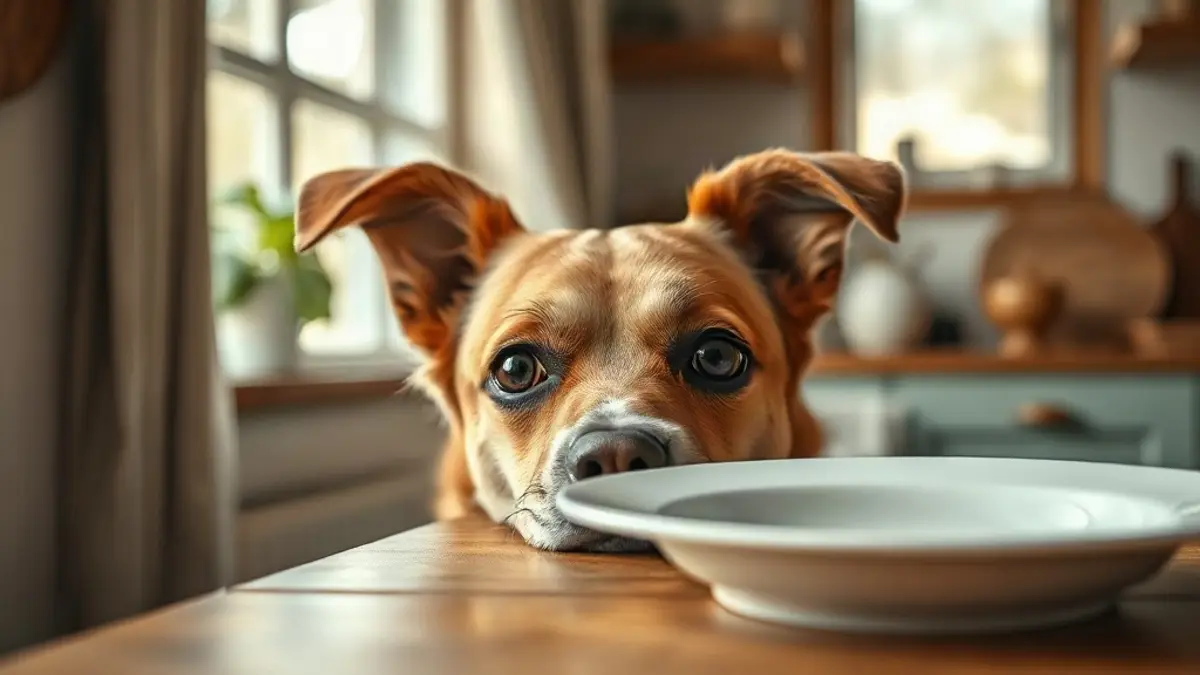
Understanding the gaze: why does my dog stare at me?
If you have ever looked up from your laptop or tuned out during a television show only to realize two dark eyes are locked onto your face with laser precision, you know the feeling. It can feel like you are being evaluated, judged, or summoned by a tiny furry telepath. To truly understand why your dog keeps their eyes fixed on you, it helps to look at how dogs process human behavior.
Unlike wolves, domestic dogs naturally seek out human eye contact. In evolutionary terms, this is a remarkable trait. Among wild canines, direct eye contact is frequently interpreted as a challenge or a threat. Domesticated dogs, however, learned early on that looking at a human’s face unlocks rewards: a dropped crumb, an open door, a scratch behind the ears, or a reassurance that everything is safe. When you ask yourself why does my dog stare at me, the simplest answer is that your dog has learned that good things originate from your movements.
Dogs watch us to track patterns. They know the subtle difference between the way you sit when you are settling in for an hour-long movie and the way you brace your legs right before standing up to grab a snack. They memorize the sound of a zipper, the shift of a chair, and the specific cadence of your sigh when you finish a phone call.
Here are several common triggers that prompt your dog to lock eyes:
- Environmental shifts: You moved toward the closet where the leash hangs, or picked up a pair of pants instead of sweatpants.
- Resource anticipation: The clock points toward 5:00 PM, or you reached into the refrigerator drawer where the good cheese is stored.
- Emotional check-ins: You sounded frustrated, startled, or joyful, and your dog wants to evaluate your facial expression for context.
- Affectionate lingering: Your dog is relaxing nearby and enjoys maintaining a calm visual tether with you while you rest.
- Unclear instructions: You gave a command or made a gesture that left your dog wondering what you want them to do next.
Understanding these moments begins with observing the rest of their body language. A dog’s eyes never tell the story in isolation; their ears, tail, stance, and facial tension provide the context you need to interpret the look.
The four main reasons behind your dog staring at owner meaning
When behavior experts study dog communication, they generally divide sustained gaze into four distinct operational categories. While every dog brings their own personality quirks to the table, most long looks fall into one of these buckets.
Asking for a prompt or reward
This is the classic request stare. It is often accompanied by a sitting posture, perked ears, and an expectant mouth. Your dog wants something specific, and they know you hold the keys to the kingdom. Maybe their water bowl is empty, their favorite ball rolled under the sofa, or they are politely suggesting that your lunch sandwich looks better suited for two.
Reading your micro-expressions
Dogs are unmatched observers of human emotion. They monitor the tension in your jaw, the squint of your eyes, and the angle of your shoulders. If you receive frustrating news or feel a sudden surge of stress, your dog may stare at you to process your shift in energy. They are asking a quiet question: Is everything okay with our pack right now?
Pure affection and trust
Not every look comes with an ulterior motive. Sometimes, a dog stares simply because they feel comfortable and safe in your presence. This affection gaze is soft, accompanied by relaxed eyelids, slow blinking, and a soft body posture. Studies show that when owners and dogs share a gentle, loving gaze, both experience a rise in oxytocin, the hormone responsible for social bonding and trust.
Predictable daily routines
Dogs possess an internal clock that operates with startling accuracy. If you usually take a walk at 7:00 AM, your dog may begin staring at you at 6:58 AM. They are not guessing; they are managing the schedule. By locking eyes with you, they are attempting to initiate the next phase of the day’s routine.
Why does my dog stare at me while I eat?
Few experiences in dog ownership are as intense as sitting down to dinner while your dog conducts a full visual audit of every bite you take. This specific gaze deserves its own category because of its sheer persistence and theatrical quality.
Imagine a golden retriever named Barnaby sitting three feet away from a dinner table. Barnaby does not bark, jump, or whine. Instead, he drops his chin onto the wood of the chair frame, tilts his head up, and tracks a fork full of pasta from the plate to his owner’s mouth with the dedication of a high-speed camera. His eyes widen slightly as the fork moves, blinking only when strictly necessary.
When people ask why does my dog stare at me while I eat, the primary driver is plain old hope. To your dog, human food represents a sensory jackpot of aromatics, fats, and seasonings far more complex than standard kibble. Even if you have never fed your dog directly from the dinner table in their entire life, hope springs eternal in the canine heart. They operate on a system of intermittent reinforcement; they believe that today might be the magical day a piece of roasted chicken falls off the plate.
There is also a social element at play. In wild packs, feeding is a group event governed by clear social order. By watching you eat, your dog is participating in the ritual. They are tracking the resource, noting who holds it, and waiting patiently to see if any surplus gets distributed.
If the dinner stare feels overwhelming, the best approach is not scolding, but redirection. Training a reliable go to mat command gives your dog a clear, rewarding job to perform while you enjoy your meal in peace. Learning about funny things dogs do can help you appreciate these quirks while still setting helpful boundaries at mealtime.
Decoding the look before a walk and other famous dog stares
The look before a walk is instantly recognizable to anyone who shares a home with a canine. It usually starts about fifteen minutes before the customary departure time. It begins with a silent posture near the doorway or right beside your desk. The eyes are wide, bright, and slightly glazed with anticipation. The moment you make eye contact, your dog’s tail gives a single, heavy thud against the floor.
This look relies on a series of contextual clues you may not even realize you are providing:
- The subtle shift: You close your laptop lid, put your phone in your pocket, or reach for a specific pair of socks.
- The threshold check: Your dog positions themselves between you and the exit, keeping their eyes locked on your hands.
- The confirmation glance: The second you touch the leash handle, the quiet stare explodes into a full-body celebration.
Beyond the walk stare, dogs have developed specific looks for various household moments. Consider the I dropped my toy under the couch stare, which alternates rapidly between your face and the dark gap beneath the furniture. Or the you are in my spot stare, where your dog stands over your cozy spot on the couch, making unblinking eye contact until you shift over to give them room.
Recognizing these quiet signals helps you understand things my dog wants to tell me without requiring a single bark or whine.
A guide to dog eye contact types
To help interpret what your dog’s gaze might mean in different situations, use this reference table comparing eye appearance, body language, and context.
| Stare Type | Visual Features | Body Language Cues | What It May Suggest | Recommended Response |
|---|---|---|---|---|
| The Soft Love Gaze | Relaxed, squinty, slow blinking, soft pupils | Loose posture, gently wagging tail, resting head | Deep trust, affection, desire to be near | Offer a gentle stroke or speak softly |
| The Dinner Audit | Wide, unblinking, tracking food movements | Tense jaw, drool dripping, sitting very close | Hope for food drops, opportunistic waiting | Ignore or send to a bed with a chew toy |
| The Routine Alarm | Fixed, bright, eyebrow twitches | Sitting upright, alert ears, subtle pacing | Prompting for walk, dinner, or backyard access | Check the clock and fulfill routine if due |
| The Puzzled Look | Cocked head, slightly asymmetrical eyes | One ear up, relaxed mouth, slight forward tilt | Trying to understand a strange sound or word | Repeat command clearly or offer reassurance |
| The Hard Stare | Fixed, unblinking, enlarged pupils, visible whites | Frozen stance, stiff tail, closed mouth, growl | Fear, possession, boundary defense, or discomfort | Stop approaching, give space, call a professional |
When a stare is not friendly: recognizing the hard stare
While most visual contact from your dog is born from love, curiosity, or hunger, it is critical to recognize when a stare indicates distress or defensive behavior. Dog owners sometimes mistake a hard, stiff stare for fixed attention, which can lead to uncomfortable or unsafe situations.
A hard stare is a clear visual warning. During a hard stare, the dog’s eyes remain wide and unblinking, often showing the whites of their eyes around the iris (a phenomenon known as whale eye). The body surrounding the gaze will be completely rigid, the jaw tightly clamped, and the ears pinned forward or back flat against the head.
This type of stare frequently occurs in scenarios involving resource guarding (protecting a bone, toy, or sleeping spot) or when a dog feels cornered and overwhelmed. It communicates a straightforward message: I am uncomfortable, and I need this interaction to stop right now.
If you ever encounter a hard stare from a dog—whether your own or a stranger’s—follow these safe communication guidelines:
- Break eye contact immediately: Looking directly back into a stressed dog’s eyes can be interpreted as a confrontation.
- Turn your torso sideways: A side-on posture signals non-threatening intentions.
- Give them physical space: Step back slowly without making sudden movements or high-pitched noises.
- Do not reach out to pet them: Avoid reaching over their head or moving into their personal space.
If your dog exhibits frequent hard stares, sudden behavior changes, unexplained fear, aggression, or signs of pain, skip the internet interpretations and consult a veterinarian or a certified professional force-free dog trainer. Physical discomfort, vision changes, and neurological issues can all manifest as unusual eye contact, and professional guidance ensures your dog remains safe and comfortable.
Why does my dog stare at me from across the room?
Sometimes, your dog is not standing right in front of your face; instead, they are curled up on a rug fifteen feet away, watching your every breath. This long-distance gaze can feel puzzling. Why watch from afar instead of coming over for a scratch?
This behavior often boils down to social buffering and companion energy. Dogs are social pack animals that find comfort in visual proximity. By keeping you in their field of vision from across the room, your dog creates a sense of safety while still enjoying their own cozy personal space. They do not necessarily need physical touch at that moment; knowing where you are and what you are doing provides all the security they require.
This behavior is especially common in herding breeds and working dogs, who are hardwired to keep eyes on their human partners while staying ready for action. It is a subtle sign of trust. If you wonder why does my dog follow me everywhere, distant staring is simply the relaxed version of that same desire to keep you within arm’s reach.
What your dog thinks when they hold your gaze
It is natural to look into your dog’s eyes and wonder what internal monologue is playing behind those dark brown or blue irises. While we cannot read a dog’s mind, we can look at their actions to form a playful picture of their perspective.
When your dog holds your gaze while you speak to them, they are likely filtering your sentences for key words they recognize: walk, treat, park, outside, car, bone, breakfast. They do not process full syntax, but they are masters of tone and emphasis. If your voice pitch rises, their eyes widen in response, ready for a fun event.
When they stare at you while you are quietly reading or resting, their internal state is much simpler. They are often reflecting the peacefulness of the room. In those quiet moments, asking what does my dog think of me reveals a comforting truth: to them, you are home base, safety, and comfort wrapped into one person.
Take a quick moment to pause and reflect on your own dog’s habits. Would you like to see how those tiny daily behaviors shape your relationship? You can take the free six-question experience to discover what your dog might say about your bond. It takes about a minute, requires no email signup, and gives you a sweet, personalized peak into your dog’s world.
The small daily quirks that make your dog unique
Every dog brings a completely distinct set of eye movements and expressive glances to their household. One dog might perform a dramatic side-eye when you move their favorite blanket, while another offers a slow, lazy blink from across the room every time you say their name.
Consider these unique visual habits that many owners notice over time:
- The head tilt pause: Staring intently while rotating their head forty-five degrees to catch the exact frequency of your voice.
- The sleepy brow raise: Keeping their body entirely still while lifting one eyebrow to acknowledge you walking past.
- The door-to-owner shuttle gaze: Looking rapidly at the back door, then at your face, then back at the door to communicate a urgent need to go outside.
- The toy presentation stare: Holding a squeaky ball in their jaws while making intense eye contact, daring you to try and take it.
These tiny, hyper-specific behaviors are what make sharing life with a dog so rich. When you learn to spot signs your dog loves you, you realize that these gaze patterns are a quiet dialect developed between just the two of you over months and years of living together.
Turning this into a keepsake: Letter From My Dog™
Once you begin noticing all the tiny ways your dog watches you—the dinner table audits, the pre-walk excitement, the soft looks from across the couch—it becomes clear how deeply they pay attention to your shared life. They notice every pattern, every pocket touch, and every quiet routine you build together.
At Letter From My Dog, we turn those specific, subtle details into timeless digital keepsakes. The Letter From My Dog™ ($7, one-time purchase) is a fully personalized letter written from your dog’s point of view, created from your answers about their unique habits, favorite spots, and quirky stares.
Your keepsake package includes:
- A full personalized letter written in your dog’s playful, loving voice.
- Our Bond Story and The Tiny Things™, highlighting the specific everyday moments only you know about.
- 10 Little Things Your Dog Probably Loves About Life With You.
- More Tail Wags, filled with gentle bonding ideas for your routines.
- A high-resolution printable PDF, custom phone wallpaper, and Instagram story share card.
There are no subscriptions or hidden fees; your keepsake is generated directly after purchase from the memories you share. If you want to explore other formats, you can also transform your dog into a hero with a personalized dog storybook ($19) or create a custom movie poster set with our dog movie poster pack ($4).
Frequently asked questions
Why does my dog stare at me when I am sleeping?
Dogs are vigilant animals that often monitor their pack members during vulnerable moments like sleep. If you wake up to find your dog sitting by the bed staring at you, they may be checking to see if you are awake yet, waiting for breakfast, or simply keeping guard over you while you rest. It is generally a peaceful sign of closeness and routine awareness.
Is direct eye contact bad for dogs?
Direct eye contact is not inherently bad, but its meaning depends entirely on the context and bond. With a trusted owner, soft eye contact fosters affection and mutual trust. However, staring fixedly into the eyes of an unfamiliar dog or a fearful pet can be perceived as an aggressive challenge. Always keep your gaze soft and pay attention to overall body language.
Why does my dog stare at me when they poop?
When a dog eliminates, they enter a vulnerable physical position that leaves them exposed to potential threats. By looking at you while they poop, your dog is relying on you as a safety sentry. They are checking your facial expression and posture to ensure that the environment remains safe and that no danger is approaching while they are distracted.
What does it mean when a dog squints at you?
Squinting or slow-blinking at an owner is often described as a canine smile. It signals relaxation, calm intentions, and affection. When a dog squints their eyes softly while looking at you, they are indicating that they feel safe and comfortable in your presence. You can slow-blink back to send the exact same calming, affectionate signal in return.
Why did my dog suddenly start staring at walls or empty space?
If a dog suddenly begins staring blankly at walls, corners, or empty space for prolonged periods, it can be a sign of sensory changes, cognitive shifts in older pets, or underlying physical discomfort. If this behavior appears suddenly alongside confusion or pacing, schedule a visit with your veterinarian for a complete health check to rule out underlying medical issues.
Why does my dog stare at my hands?
Your hands are the primary tools through which good things happen in your dog’s life. Hands scoop food, open doors, throw tennis balls, hold leashes, and give ear scratches. Your dog stares at your hands to anticipate what action you are about to take next, watching for subtle movements toward treat jars, coat pockets, or favorite toys.
Keep reading
Why Does My Dog Follow Me Everywhere? The Sweet Reasons
From kitchen footsteps to bathroom door duty, here is what drives your dog's constant shadowing and what it says about your bond.
Funny Things Dogs Do (and Why We Love Their Quirks)
From post-bath zoomies to dramatic head tilts, an inside look at the endearing behaviors that make life with dogs so endlessly entertaining.
What Does My Dog Think of Me? A Playful, Honest Look
Science shows dogs view us as secure bases and daily partners. Here is a thoughtful, playful look at what goes on in your dog's head.